Essential Question

What treatment gives senior dogs diagnosed with stage two Insulinoma the best quality of life before their passing?

Thursday, June 6, 2013

Blog 26: Senior Project Reflection


(1) Positive Statement
I am definitely proud that I was able to pull off making the room look like the inside of a dog. Senior project wise, I'm really glad that i found so much research and learned a lot about Insulinoma and how to treat it because I think I definitely played a role in prolonging my dog's health and happiness. Gaining mentorship at Southern California Animal Hospital was also a great experience because I learned so much about the day to day tasks that go into working at a veterinary clinic.


(2) Questions to Consider
a.     What assessment would you give yourself on your 2-Hour Presentation (self-assessment)?
P+, maybe AE? 
b.     What assessment would you give yourself on your overall senior project (self-assessment)?
P+? Hopefully...

(3) What worked for you in your senior project?
Definitely my mentorship because I learned so much. Another thing that worked was research checks. It gave me the time to sit down and just focus on finding new information about Insulinoma. 

(4) If you had a time machine, what would have you done differently to improve your senior project if you could go back in time?
Keeping up with the due dates. I kind of screwed myself over by turning in the i-Search revisions late because caused me to get a lower grade.

(5) Finding Value
Senior project has given  me invaluable experience working at a veterinary clinic. I now  know how to give and make vaccines, take out sutures, clean and take care of animals in isolation, give medications, suture, and so much more. 

Room Setup

I kind of forgot to take more pictures of the room after I set it up, but as you can see on the wall, there's the noodles that are supposed to replicate the ribs in a dogs body. Each table also had red tables cloths with the drawings of the organs. I put my essential question with each persons name on little stickers and put them on little baggies that had the cookies in them. Overall, I think the room looked pretty kick ass. 

Ooooooorgans

 So, I tried to make the room look like the inside of a dogs body, so drew out organs on poster boards to put on each table. 
These are the lungs. I also drew the kidney, liver, heart, brain, digestive system, and pancreas.

Cookies!

 These are dog and human friendly cookies!
 It's pretty much just made out of wheat, honey, carob chips, and other such nonsense.
 That's my momma helping me make them. 


Drying the Paper Mache


 These are the noodles that my dog tore up which ultimately put her in the emergency room because of an intestinal blockage. 
 These are the noodles before I painted them.
 I had to hang the noodles across the chairs so that they would dry kind of curved like a rib would be.


Paper Mache

I made the paper mache for the swimming noodles using a mixture of flour and water. Surprisingly, this mixture proved to be super strong and made the noodles look like ribs.

I had to cut up strips of newspaper to use for the paper mache. Basically, you coat the newspaper strips in the flour/water mixture and then place it on the noodle. I put three layers of newspaper on the noodles.

Thursday, May 30, 2013

Prep for 2 Hour Presentation

So, I decided to take on the task of making my presentation room look like the inside of a dog's body. I cut up some swimming noodles today and some newspaper  to paper mache the noodles to look like ribs. I'm going to mount the ribs on the wall to imitate the thoracic cavity of a dog.


Monday, May 20, 2013

Cancer of Cuteness

So, obviously, these kittens don't have a whole lot to do with my senior project, but they do have the cancer of cuteness, so that should kind of count. 


These first two pictures are from the first week that I had the kittens. Conor, the tabby, had a bacteria infection when I first found him. I had to isolate him from his brothers for a few days, make him special formula with extra vitamins, and pretty much rock him to sleep every night because he was so restless. He eventually got better after a week or so. 


 These are more recent pictures of the kittens. They are about five/six weeks old here. 


Taking care of these kittens has been draining to say the least. For the first two weeks, I barely got any sleep because I had to wake up every two hours to hand feed them with a little bottle. Although they don't have to be hand fed anymore, they require so much love and attention. As soon as I come home after school, they crawl all over me and hand onto me so I can't get up. It's going to be really difficult giving them away to new homes, but this has been an amazing experience that I will never forget. 

Blog 25: Mentorship


Literal:
Southern California Animal Hospital
Dr. Kumar
(626) 330-4558

Interpretive:
The most important thing I have gained from volunteering at Southern California Animal Hospital is learning more about the veterinary field. I learned how to mix vaccines, administer vaccines, learned the names of medications, learned how to give medications, acquainted myself with veterinary clinic procedures, and other such things. I think all of these things I have learned will give me an advantage when I pursue a career in this field. 

Applied:
Although I haven't had much experience with cancer while working at SC Animal Hospital, there was one cat that was being treated there for leukemia. I was able to work with the doctor when he was giving the cat her chemotherapy. The chemo therapy that the cat was receiving was called Ocreotide. This was initially going to be one of my answers, but after seeing the affects that it had on the cat with leukemia, I decided against it. 

Monday, May 13, 2013

Blog 24: Exit Interview


1. Question: What medical treatment gives a senior dog diagnosed with stage two Insulinoma the best quality of life before its passing? 

Answer: If surgical removal, somatostatin, and diazoxide with predinose can treat a dog with Insulinoma, then the best medical treatment is diazoxide with predinose because this combination of medication not only alleviates the symptoms brought on by hypoglycemia, but it also slows down the progression of the cancer. 

2. I chose diazoxide with prednisone as my best answer because of my extensive research on the topic and the experiences I have had with my own dog who has Insulinoma. Belle, my dog, was on many different medications before we tried treating her with diazozide with predniosone. When we switched her over to this medication combination, we saw an instant change in her mental and medical health. 

3. The hardest problem that I faced was trying to find mentorship. Most veterinarian clinics require that their volunteers be 18 or older because of liability issues. At first, I settled for volunteering at a dog shelter called Beagles N Buddies, but it wasn't giving me the experience and knowledge that I really needed for my senior project. Fortunately Reann told me about a vet clinic where she volunteered, Southern California Animal Hospital. I was able to start volunteering there immediately and gained much more experience volunteering there than at the dog shelter. 

4. One of my most important sources was a case report from the National Center for Biotechnology Information called Improved Survival in a Retrospective Cohort of 28 Dogs with Insulinoma. This case report gave me valuable information that I used for science experiment and also gave me a better idea of the survival times of dogs who are diagnosed with this cancer. My second best source is my dog Belle (even though Purther told me she was a valid source). Belle has given me a first hand look at how Insulinoma affects dogs. It's one thing to read about it in papers or hear it from a veterinarian, but it's a whole other thing to see it for yourself. She showed me exactly what areas of the body the cancer attacks and how the body reacts to certain medications. The other reason why she is my best source is because without her, I never would have recognized my passion for veterinarian oncology. I initially thought that I wanted to just be a small animal veterinarian, but now I know that I want to be an oncologist.

5. My product is gained knowledge of the veterinarian field. This includes learning new terminology, knowing what purposes certain medications serve, how to make and administer vaccines, how to give medications, the protocol in veterinarian clinics, rehab for injured dogs, and conquering my fear of watching surgeries. I gained all these skills through the time I spent volunteering at the Southern California Veterinarian Hospital.

Tuesday, May 7, 2013

Blog 23: 2014 Interview


1. Jon Shoemaker
    East House

2. Essential Tremors, is diagnosed with it
    Stage Managing/Stage Crew, become interested in it through drama

3. Try to find a doctor to shadow
    Possibly stage manage a play

4. Gabriel s presentation on stage managing

5. Q: What are the steps to being successful in senior year?
    A: Finding a solid mentorship
        Using research checks to your full advantage

Monday, April 22, 2013

Blog 21: Independent Component 2

LITERAL:
a) I, Cheryl Marie Skywalker, affirm that I completed my independent component which represents 30 hours of work.
(b) "Improved Survival in a Retrospective Cohort of 28 Dogs with Insulinoma." National Center for Biotechnology Information. U.S. National Library of Medicine, n.d. Web. 10 Mar. 2013. This source was extremely helpful during my science experiment. It gave me a better understanding of what the life expectancey is for dogs with Insulinoma and what treatments are being given to other dogs.
c) Independent Component 2 Hours

d) I completed 36 hours at the Southern California Animal Hospital in La Puente. Although a lot of my time was dedicated towards cleaning kennels and treatments, I was a

INTERPRETIVE :
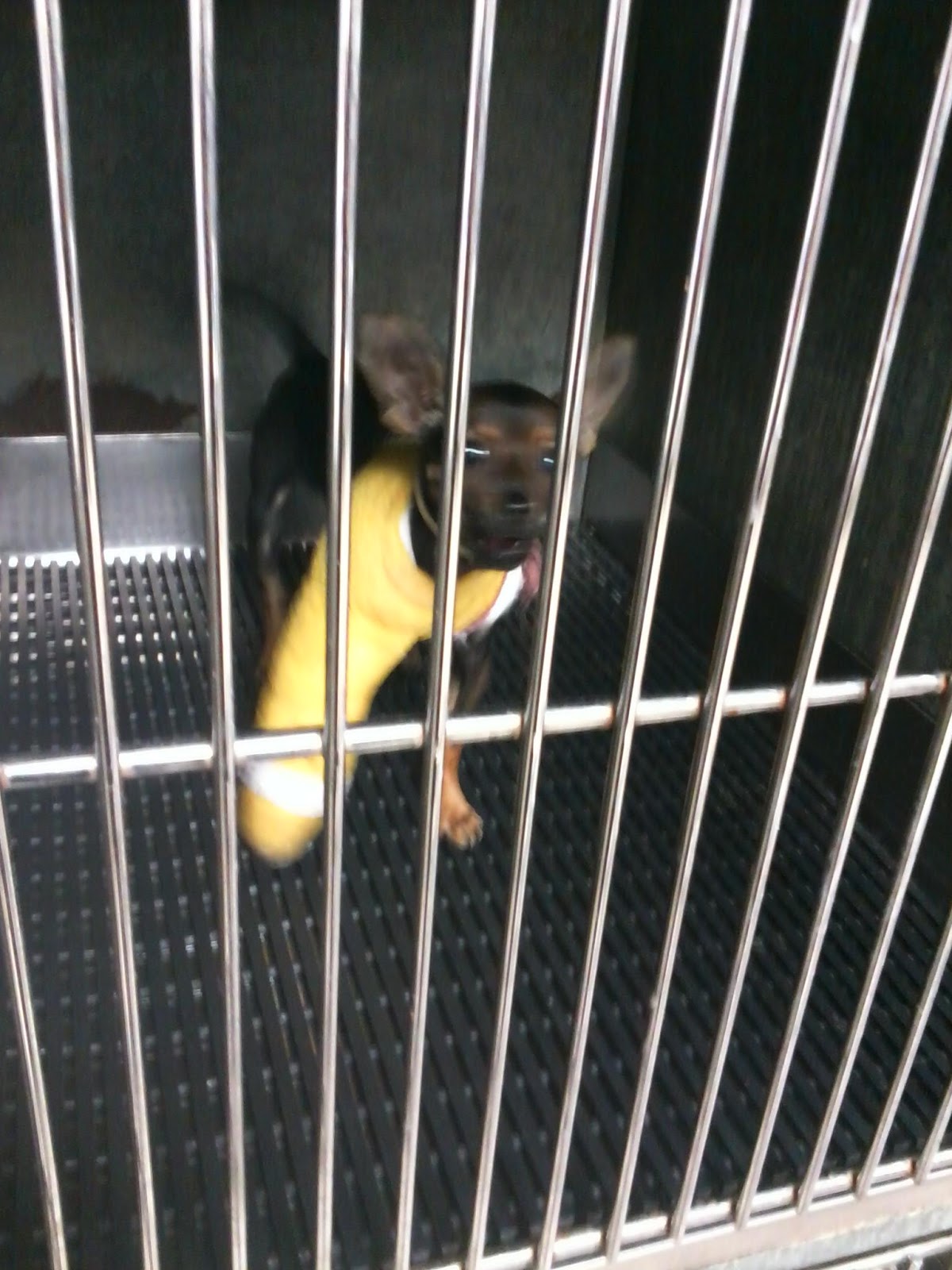
This little guy broke his leg playing with his brothers and sisters. All of them actually fell down the stairs and broke their legs.
 

This is Oscar; he had a serious case of pneumonia  I helped feed his some Nutra paste which is a high nutrient paste that helps puppies receive the nutrients that is so vital to their health. 
Pneumonia seems to be a common occurrence lately because this shepherd puppy also caught it. Although he looks super happy in this picture, he was really sick a couple days ago. 
This is me with Bobbi. He is a super crazy Chihuahua puppy rescue that is currently being housed at the hospital. Nothing is wrong with him medically, I just really like to take him out on walks. (:

APPLIED

Leukemia is not the cancer I am researching, however, helping with the treatment did give me an insight into what medication is used to treat cancer. This cat was being given a regimen of ocreotide which is a chemo therapy drug. It is given intravenously once a week (the dosaging varies depending on the animal's situation). Ocreotide was going to be another one of my answers to my essential question, but after seeing the affects it had on the cat, I decided against it. Ocreotide makes the animal very tried and weak, almost lethargic, and although it is slowing down the cancer, it is making the animal's life less enjoyable. 

Friday, April 12, 2013

Beagles N' Buddies

These pictures are from a couple months ago when I went to Apple Valley to volunteer at a non-profit dog rescue called Beagles N' Buddies. I have been volunteering there for a little over four years. I mainly take pictures of the dogs for the website, but I have assisted in adoptions, vaccinations, micro-chipping, wound care, dog socializing, grooming, and of course the smelly task of cleaning out the kennels.


 Besides this big ol' pig, there are also other farm animals on the premises such as hens and chickens. 


Sunday, April 7, 2013

Mentorship Update

 This is Lassie. She was brought in to the Southern California Animal Hospital a while back after her owners accidentally ran her over. She had a broken tail and a shattered right hip and leg. Dr. Kumar (the attending doctor) amputated her tail because it was too damaged to ever function again. The doctor attempted to re-build Lassie's hip using a metal plate, but her hip was too damaged to reconstruct. Lassie's owners were going to euthanize her because they didn't want to deal with any more surgeries, but Dr. Kumar decided to take her in and amputate her right leg. Amputation meant that Lassie would have to learn how to walk all over again, but at least she would have a chance to try.
 This was Lassie's first attempt at learning to walk again. She is really timid so she was having a difficult time being outside in a new environment, but she did manage to get a few steps in.
 This cutie pie is Shelia. She is a rescue dog who is currently being housed at the hospital because she had a serious case of Mange. Some of the patches of missing hair is still visible on her back. Shelia has a long way to go due to the serious condition of Mange, but she still a happy and out going puppy none the less.
 This little guy is Oscar; he was originally brought in with his other brothers and sisters for treatment of Parvo, but after the Parvo was treated, he developed a pneumonia which actually become more life threatening than the Parvo. In this picture, he is hooked up to an IV to keep him from becoming dehydrated. In the bottom picture, I was feeding him a high nutrient paste because he couldn't eat solid foods. Last time I saw Oscar, he was hooked up to an IV and also had oxygen tubes. I still don't know what happened to Oscar, but hopefully he is better and living a happy puppy life.


My pants are as baggy as a cholo's in this picture, but the dog I'm holding is Bobbie. He is also a rescue dog that is staying at the hospital. Many of the volunteers, including myself, take some of the rescue dogs being house at the hospital out for walks and work with them on training and behavior issues to help them get adopted.

Blog 20: Three Column Logic Chart

Link to chart

Wednesday, March 6, 2013

Blog 19: Senior Project & ESLR's

1.  Effective Learner
2.  Effective Learner: I have gone out of my way to incorporate what I have learned about Insulinoma in dogs to my own dogs diagnosis and treatment.

3. This a picture of the medication that my dog now takes. I actually found out about this medication through my research for senior project. 

Thursday, February 28, 2013

Blog 17: Fourth Interview Questions

1. In your opinion, what medication or procedure best treats pancreatic cancer and why?
2. At what stage of cancer does surgery become more harmful than effective?
3. Why is that operation rooms in veterinarian clinics much less sterile than those used for humans?
4. What is the pre op. medications that a dog with Insulinoma would have to go through before surgical removal of the tumor?
5. What is the benefit/side effects of prescribing diazoxide to a dog?
6. Benefits/side effects of glucocorticoids?
7. Benefits/effects of pednisone? 
8. Where is the best place to buy diazoxide for a dog? (because it is so expensive)
9. How long does a dog typically have Insulinoma before the symptoms of it appear?
10. Which treatment, surgical removal, diazoxide with prednisone, or glucocoticoids, prolongs a dogs life the most?
11. How can a side effect of diazoxide by hyperglycemia if it is supposed to treat hypoglycemia?
12. What are the exact differences between hypoglycemia and hyperglycemia?
13. What is the difference between Insulinoma and diabetes?
14. How can a dog die of pancreatitis? 
15. During surgery, how can a surgeon avoid palpating the pancreas which in turn causes pancreatitis?
16. How much of the pancreas can be removed for a dog to still survive?
17. How common is it for the Insulinoma to metastasize to the respiratory system?
18. Out of all your years of being a vet, how many times have you come across a case of this form of pancreatic cancer?
19. How do the pancreatic tumors look? How does a surgeon differentiate it from the rest of the pancreas?
20. Can you think of any other areas of pancreatic cancer that I can study that would help me with my research?

Blog 18: 2-Hour Meeting Answer #3


Essential Question: What medical treatment gives senior dogs diagnosed with stage two Insulinoma the best quality of life before their passing?

My next answer to my essential question is Glucocorticoids. Glucocorticoids help balance out the glucose levels in the dogs body because the high amount of insulin makes the glucose drop sending the dog into hypoglycemic shock. There wasn't one specific source that helped me come to this conclusion. The many case reports and lab studies that I have read gave me this answer. I plan to study the exact effect that these medications have on the dogs whole body, not just on the cancer tumor. 

Thursday, February 21, 2013

5b: Science Project (revision)


1. Veterinarian Oncology, Insulinoma
2. Finding the survival rate for dogs diagnosed with Insulinoma. 
3. If a dog diagnosed with Insulinoma has a tumor that has metastasized to the liver, then its survival time is decreased by 200 days or approximately six and a half months. 
4. In order to perform my experiment, I will analyze the data that I found in a very informative case report found on a medical journal website. 
5. Animal Biology